
Updated Regularly: The Border Closes for Unwanted Journalists: Who Is and Isn’t Welcome in Georgia?
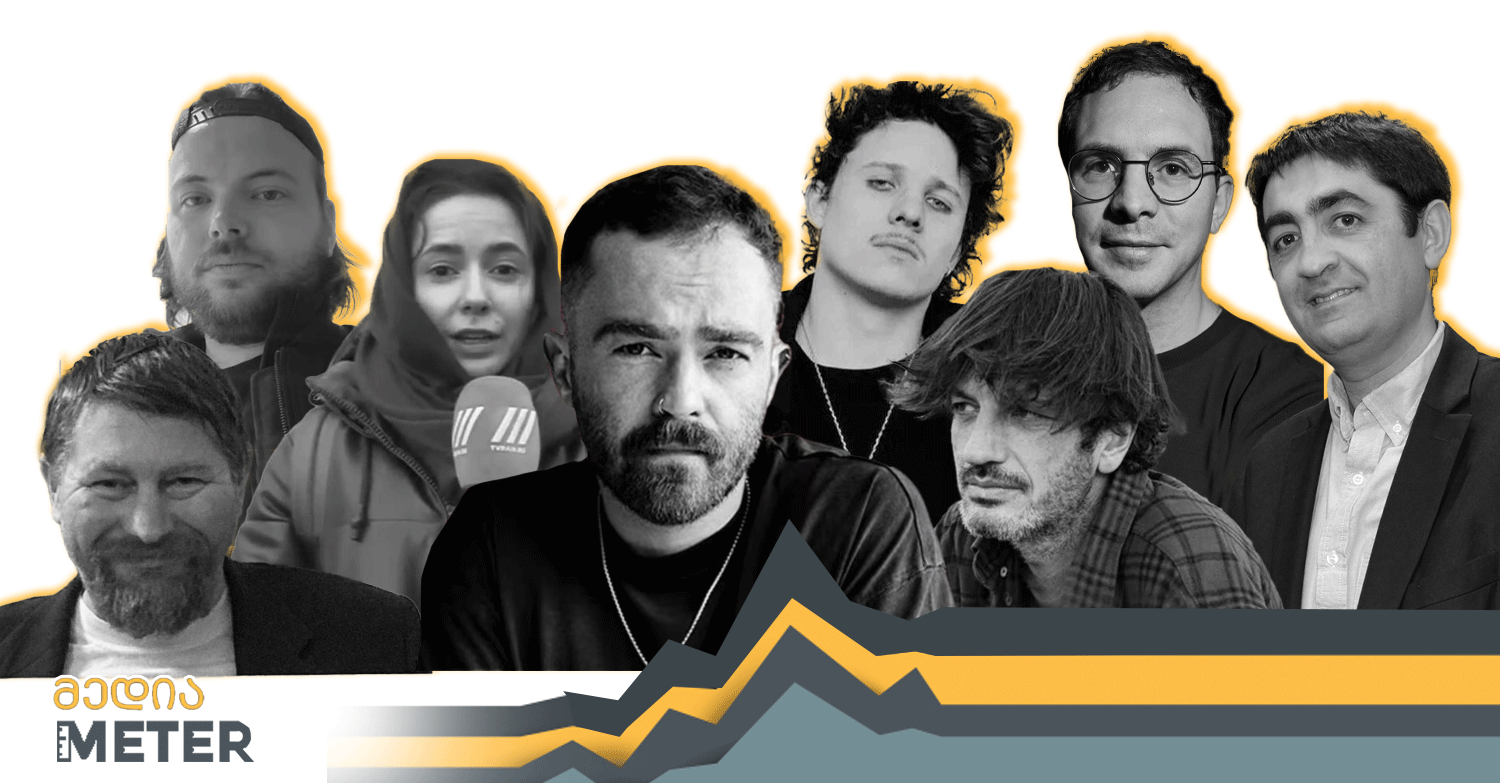
Update: On June 11, French photographer Marylise Vigneau was also denied entry into Georgia. In line with other journalists, Marylise Vigneau — who visited Georgia twice last year — had covered anti-government, pro-democracy, and pro-European demonstrations.
It has recently become a trend in Georgia to deny entry to journalists from the Western media or journalists with editorial policies critical of the Russian government. The latest case involves British journalist Will Neal, whose investigative article for Byline Times, detailing Russian ties of Hunnewell Partners, a company owned by Irakli Rukhadze, a close business associate of Georgian Dream founder Bidzina Ivanishvili, was followed by a discreditation campaign against the journalist himself. Will Neal, who had been living in Georgia since 2022, was turned back at the border without explanation.
According to data gathered from open sources by the Media Development Foundation, between 2022 and 2025, there have been 15 cases of journalists being denied entry to Georgia. Among them are seven Russian journalists critical of the Kremlin, one Belarusian, one Armenian citizen representing regional media, and six from Western media. Most of the Western journalists were covering anti-government, pro-democracy, and pro-European demonstrations in Georgia that erupted in protest against the so-called “foreign agents” law and the government’s decision to postpone the opening of EU accession negotiations until 2028.
Media critical of Russian and Belarussian governments | Western media | Regional media |
| ||
September, 2024 | Andrei Mialeshka — freelance journalist (Belarus) | October, 2024 | Ray Baseley — freelance journalist (the Czech Republic) | September, 2024 | Arsen Kharatyan — Aliq Media (Armenia-Georgia) |
March, 2022 | Mikhail Fishman — TV channel Rain (Russia) | October, 2024 | Stephan Goss — IFJ Global/freelancer (Switzerland) | ||
March, 2022 | David Frenkel — Media group Mediazona (Russia) | February, 2025 | Clément Girardot — freelance journalist (France) | ||
September, 2022 | Vasily Krestyaninov — The Insider, AP (Russia) | March, 2025 | Jérôme Chobeaux — freelance journalist (France) | ||
September, 2022 | Dmitry Aleshkovsky — «Такие дела» (Russia) | May, 2025 | Will Neal — freelance journalist (Great Britain) | ||
September, 2023 | Aleksandra Shvedchenka — TV channel Rain (Russia) | June, 2025 | Marylise Vigneau — Anzenberger Agency (France) | ||
February, 2023 | Filip Dziadko — Project “Arzamas” (Russia) | ||||
December, 2023 | Aleksei Ponomaryov — Kholod (Russia) | ||||
Out of the 15 listed journalists, eight had lived in Georgia for months or even years. For example, a Belarusian journalist in exile lived in Georgia with his family for three years. Russian photojournalist Vasily Krestyaninov, who collaborated with the Associated Press and The Insider, attributes his denial of entry into Georgia to his professional activities. Interestingly, during his 11-month stay in Georgia, Krestyaninov organized and participated in anti-Putin regime protests. According to him, it was during these protests that law enforcement officers approached him, asked for his documents, and took photographs of him.
In September 2024, Arsen Kharatyan, the editor of a Georgia-based Armenian-Georgian media outlet, was turned back at the border. Kharatyan had previously lived in Georgia for over five years.
French journalist Clément Girardot had worked in Georgia for over 10 years. He has a Georgian wife and a child who is also a Georgian citizen. On February 12, 2025, he was denied entry to the country. Despite having a Georgian residence permit, Girardeau was detained after a long wait at the border and sent back to France.
The official documents explaining the refusal to allow these journalists into the country generally do not specify the reasons. However, a trend suggests that journalists who have covered protest rallies in Georgia, or, in the case of Russian journalists, those who have spoken out against the Putin regime, are likely to be denied entry.
The international organization Reporters Without Borders (RSF) had already called on the Georgian government in March 2023 to explain why journalists were being barred from entering the country and to put an end to this practice.
On April 10, 2025, the organization also responded to the denial of entry to French journalists, condemning the disturbing trend that appears to be aimed at obstructing the independent journalistic coverage of protest movements.
In a statement regarding the case of Will Neal, the organization emphasized that conditions for journalists in Georgia significantly worsened after the controversial elections of October 2024.
It is noteworthy that this practice of denying entry at the Georgian border has affected not only journalists but also EU diplomat Simon Vanderbrook, Lithuanian human rights defender Regina Jegorova-Askerova, Russian activist and critic of Putin and the Georgian Dream party Vladimir Teteriev, and Romanian comedian Victor Patrascan.
Russian Propagandists in Georgia
While there is a growing trend of denying entry to journalists from Western media and Russian journalists who are critical of the Kremlin, Kremlin propagandist journalists face no obstacles when entering Georgia from Russia, whether for work or leisure. Among them is TV presenter Ksenia Borodina, who violated Georgia’s Law on Occupation, has visited the country twice in the past three years. In addition to Borodina, Alexander Malkevich has also violated the Law on Occupation (Georgia's Law on Occupied Territories prohibits foreign citizens from entering the occupied regions from the territory of Russia). Malkevich is sanctioned by both the United States and the European Union. Moreover, Malkevich, who is wanted by the U.S., had ties with Yevgeny Prigozhin, the founder of the Wagner Group.
April 2021, | |
September 2022 | |
November 2022 | |
October 2024 | |
April 2025 |
In May 2024, a journalist from ZVEZDA NEWS, a media outlet of Russia’s Ministry of Defense, was covering the demonstration in front of the Georgian parliament and falsely claimed that photos of Stepan Bandera were posted on the parliament building. This disinformation, spread by the Russian Ministry of Defense’s media, was debunked by Myth Detector.
Additionally, journalists from Russian state media outlets Russia Today and TASS also came to Georgia to cover the ongoing protests. In footage released by Russia Today, their correspondent was seen reporting directly from Rustaveli Avenue. Furthermore, a photographer from TASS, Mikhail Tereshchenko, won a World Press Photo award with a photograph taken during one of the protest rallies in Tbilisi.


